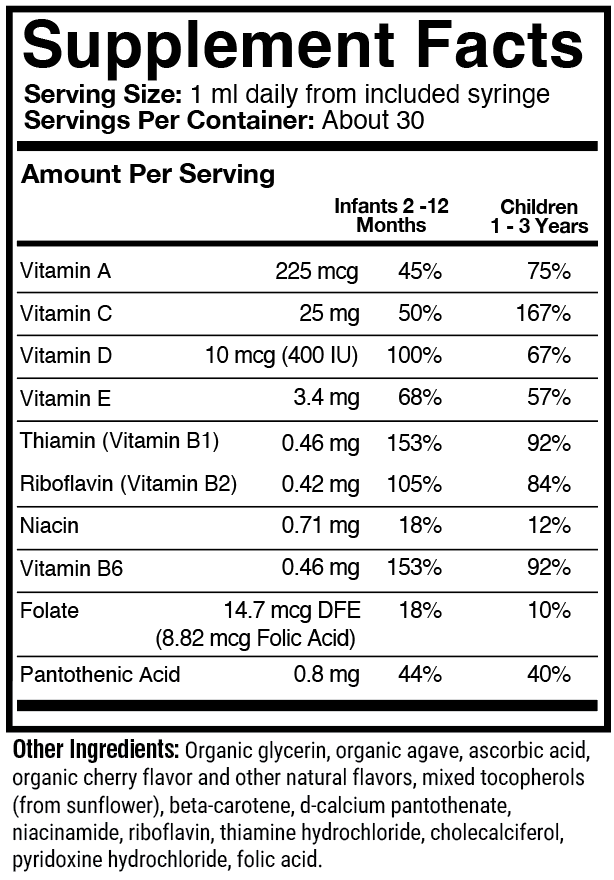
Vitamin A
Helps your baby’s body fight infections and supports crucial development in their eyes, immune system, skin, and bones.
Vitamin C
Babies bodies are not able to produce on their own. Vitamin C is an essential nutrient for vital functions like immune system support, collagen formation for healthy bones, skin, and tissues, and enhancing the absorption of iron from food. It also acts as an antioxidant to protect cells from damage.
Vitamin D
A critical contribution in bone health, dental health and musculoskeletal development while also supporting the immune system. These benefits are ultra important to your baby, especially in the first year.
Vitamin E
A vital antioxidant that protects cells from damage, supporting immune function, growth, and overall neurological development. It helps a baby's body fight off free radicals and keeps blood vessels healthy, and is especially important for preterm infants who may be more vulnerable to oxidative stress and certain health issues.
Vitamin B1 (Thiamin)
Thiamin is crucial for optimal neurodevelopment in both the fetus and the newborn. Proper thiamin intake is essential for all infants, especially those who are exclusively breastfed, to prevent deficiencies. B1 contributes to a baby's brain development, growth, and the conversion of food into energy.
Vitamin B2 (Riboflavin)
For exclusively breastfed infants, the mother's riboflavin status is important, as it passes into breast milk. Vitamin B2 helps our bodies convert food into energy, and this function is key for a baby's rapid growth and activity. It also supports the development of healthy cells, tissues, and organs, including muscles and nerves as well as participating in maintaining a healthy immune system, healthy skin, hair, and eyes.
Vitamin B3 (Niacin)
An essential for a baby's healthy growth and development, playing a major role in metabolism, cell function, and neurological development.
Vitamin B6
Necessary for healthy brain development, the functioning of the nervous system, and the production of neurotransmitters like serotonin and dopamine. B6 supports energy production and a healthy immune system, which are all critical for a baby's responsive physical and cognitive growth.
Vitamin B9 (Folate)
Significant micronutrient for cell growth, making DNA and RNA, and forming healthy red blood cells.
Vitamin B5 (Pantothenic Acid)
Fundamental for metabolizing carbohydrates, proteins, and fats into energy. B5 helps produce red blood cells, which carry oxygen throughout the body and is central for producing coenzyme A, which is involved in a myriad of metabolic processes.