Vitamin C vs. Vitamin D for Your Baby: What Parents Should Know
| updated:
Key Takeaways:
- Breast milk is naturally low in vitamin D, which is why breastfed babies are often given a daily vitamin D supplement during the first year to support bone growth and calcium absorption.
- Vitamin C also plays an important role in growth, iron absorption, and immune health, but most babies get enough from breast milk or formula, so deficiency is rare.
- Vitamin D and vitamin C aren’t taken the same way or for the same reasons. Vitamin D is typically given daily during infancy, while vitamin C needs are usually met through diet and used only periodically for immune support.
If you’re breastfeeding or planning to, you’ve probably already heard a lot about the importance of vitamin D for infants, often sold as easy-to-use drops. After all, vitamin D plays an important role in bone development and skeletal growth during the first year of life, and breast milk alone typically doesn’t provide enough vitamin D to meet a baby’s needs.
But you might be wondering about other key vitamins, too—like vitamin C. Do infants need both vitamin D and vitamin C, or is one more important than the other? And if babies do need them, how often should they be taken, and for how long?
New parenthood can feel overwhelming, especially when you’re running on little sleep. Your child’s nutritional needs don’t have to add to the stress. Ahead, we’ll break down vitamin D vs. vitamin C for infants in a simple, easy-to-follow way, from infancy through early childhood.
Does Your Baby Need Vitamin D?
Yes, infants need vitamin D, especially during the first year of life when they’re especially vulnerable to vitamin D deficiency.
Vitamin D plays a vital role in bone health and musculoskeletal development. One of its key functions is helping the body absorb calcium, which supports healthy bone growth and metabolism. Without enough vitamin D, infants may not absorb calcium as well, which can affect healthy bone development over time and may contribute to issues like slower growth or getting sick more often.
Because infants grow rapidly and their bones are developing so quickly, vitamin D is considered one of the most important nutrients during infancy. Many babies, particularly those who are breastfed, may not get enough vitamin D from food or sunlight alone, which is why supplementation is often recommended starting in the first few days of life. But don’t panic. Relying on a vitamin D supplement is common and doesn’t mean there’s anything wrong with breastfeeding. Infants just need a little extra support during these early and pivotal stages of growth.
When choosing a vitamin D supplement for your baby, it’s important to look for one that’s both effective and gentle. Pediatricians typically recommend vitamin D3 (cholecalciferol) over vitamin D2 because it’s better absorbed and more effective at raising vitamin D levels in the body.
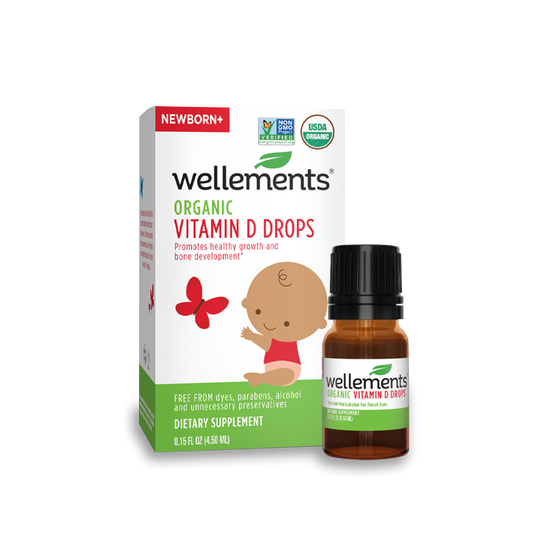
Wellements Organic Vitamin D Drops are made specifically for infants, with one simple daily drop providing the recommended 400 IU. The drops use organic vitamin D3 formulated with healthy fats like extra virgin olive oil and MCT oil, which helps support absorption. It’s also USDA Organic, non-GMO, and free from added sugars, dyes, alcohol, and common allergens.
Does Your Baby Need Vitamin C?
Vitamin C is another important nutrient for babies, but deficiency isn’t as common because breast milk typically provides enough vitamin C to meet a baby’s needs. Levels can still be low, though, if a nursing mother isn’t getting enough vitamin C from her diet.
Vitamin C supports a number of important functions during infancy, including normal growth and tissue development. It plays a role in collagen production, which helps support the connective tissues, and it also helps the body absorb iron from food. Vitamin C is involved in immune function as well, helping your baby fight off germs as they begin interacting with the world around them.
Because most babies get enough vitamin C through their diet, routine vitamin C supplementation isn’t usually necessary during early infancy. However, vitamin C supplements can be useful for occasional support for an immunity boost.
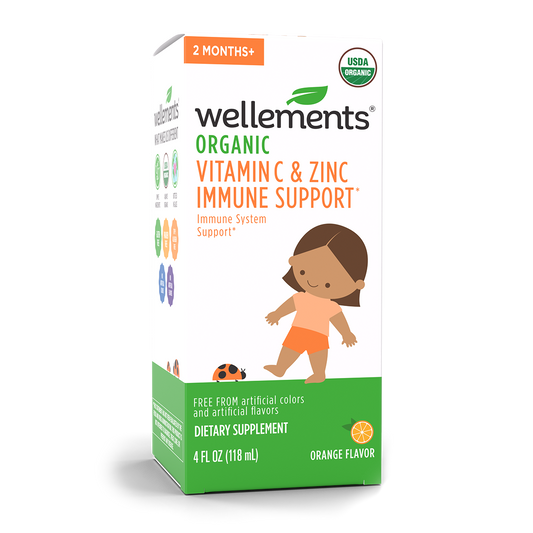
For parents looking for extra immune support during times of increased exposure, like starting daycare, traveling, or during cold and flu season, supplements can be a lifesaver. Wellements Vitamin C & Zinc Immune Support Drops combine vitamin C with zinc and other key vitamins like A, D, and E, to help strengthen your baby’s developing immune system. Like the vitamin D drops, this supplement is USDA Organic, independently tested for quality and safety, and free from unnecessary additives, making it a gentle yet powerful option.
Vitamin C & Zinc Immune Support
Sale price
$14.99
Vitamin D vs. Vitamin C: Key Differences for Babies
We already mentioned that vitamin D plays a crucial role in bone development and skeletal growth, and that vitamin C is important for immune support and collagen production, but those aren’t the only differences.
The body also processes vitamin D and vitamin C differently. Vitamin C is a water-soluble vitamin, meaning the body uses what it needs and eliminates the rest. Because it’s not stored, vitamin C needs to be consumed regularly through food or diet.
Vitamin D is fat-soluble. This means it can be stored in the body’s fatty tissues and liver. Vitamin D is also better absorbed when taken with a source of fat, which is why infant vitamin D supplements usually come in drop form alongside healthy fats like olive oil or MCT oil.
Here’s a quick summary of their differences:
|
Vitamin D |
Vitamin C |
|
|
Functions |
Supports bone development and skeletal growth |
Supports normal growth, connective tissue development, and immune function |
|
Why it matters in infancy |
Helps the body absorb calcium while growing rapidly |
Plays a role in collagen production, iron absorption, and immune support |
|
How babies get it |
Infant formula (fortified with vitamin D) and limited amounts from breast milk |
Breast milk and infant formula |
|
Deficiency risk |
More common in breastfed infants, especially during the first year |
Less common in healthy breastfed infants |
|
When to use |
Often recommended during infancy, beginning in the first few days of life |
For occasional support to strengthen and maintain immune function |
|
Intake guidance |
12–24 months: 600 IU/day |
Birth–6 months: 40 mg Infants 7–12 months: 50 mg Children 1–3: 15 mg Children 4–8: 25 mg |
|
How the body processes it |
Fat-soluble; stored in the body and better absorbed with dietary fat |
Water-soluble; excess amounts not stored in the body |
Which Vitamin Is More Important for Babies?
Both vitamin D and vitamin C are important for a baby’s health and throughout childhood, but they serve different purposes.
Are you already out of onesies because your baby sized up? That kind of rapid growth is exactly why vitamin D is so important in your baby’s earliest months. It supports bone development and calcium absorption during this critical stage, and many babies need a daily source of vitamin D if they aren’t getting enough from other sources, like fortified infant formula.
Vitamin C matters too, but most infants already get what they need from breast milk or formula. As babies grow and start eating more solid foods, vitamin C naturally comes from fruits and vegetables, with supplements used only occasionally to give immune health a little extra support.

How Vitamin Needs Change from Infancy to Early Childhood
During infancy, babies usually get enough vitamin D through a combination of breast milk or formula and supplementation. But as babies grow into toddlers, their diets begin to expand—think mashed peas, soft fruits, scrambled eggs, and early finger foods—and so do the ways they get nutrients like vitamin D and vitamin C.
Research shows that vitamin D remains important beyond the one-year milestone, even as their eating habits change. While some toddlers continue to rely on supplements, others begin getting enough vitamin D through fortified foods like milk, yogurt, and cereals, along with small amounts from foods such as eggs or fish.
Vitamin C, on the other hand, becomes easier to get from food as fruits and vegetables are introduced more regularly. Oranges, strawberries, potatoes, and broccoli are all kid-friendly options that help meet your toddler’s vitamin C needs as their diet expands.
The Bottom Line
Vitamin D and vitamin C both support healthy development in your child’s early years, but they play very different roles.
Here’s what you should know:
-
Vitamin D is usually the top priority during a baby’s first year.
It supports bone development and calcium absorption during a period of rapid growth, which is why providers often recommend daily supplementation when breast milk or formula alone doesn’t cut it.
-
Vitamin C is important, but deficiency is rare in infants.
Most babies get what they need through breast milk or formula, with supplementation typically used only occasionally to support immune health.
-
These vitamins aren’t taken the same way or for the same reasons.
Vitamin D is fat-soluble and commonly given daily in infancy, while vitamin C is water-soluble and more often obtained through food as babies grow.
-
As babies move into toddlerhood, food plays a bigger role.
Fruits, vegetables, and fortified foods naturally provide vitamin C, while vitamin D intake may still come from supplements or fortified products depending on a child’s diet.
FAQs
Do babies need vitamin D or vitamin C?
Babies need both vitamin D and vitamin C, but they usually get them in different ways. According to the CDC, all babies need vitamin D beginning shortly after birth, and breastfed babies should take a daily supplement with 400 IU of vitamin D.
Vitamin C is typically provided through breast milk or infant formula and isn’t routinely supplemented in healthy infants. Some parents choose to give vitamin C occasionally to support immune health as their baby grows.
Can babies get enough vitamin D from breast milk?
Not usually. Breast milk contains limited vitamin D, which is why many breastfed babies are advised to take a daily vitamin D supplement starting shortly after birth.
Can’t babies get vitamin D from sunlight?
Both the FDA and the American Academy of Pediatrics (AAP) recommend keeping newborns and babies under 6 months out of direct sunlight. Therefore, sunlight isn’t an adequate source of vitamin D for infants, and supplementation is preferred.