Your Baby's Nighttime Cough Explained
| updated:
As a parent, you only want what is best for your children, and it can be incredibly difficult when your child is sick. Children so young cannot express what is wrong, so when a parent hears a consistent or burdensome cough at night, it can cause panic. The key to easing your anxiety is to understand the types of coughs and the reasons why your baby may be coughing.
Types of Baby Coughs
Many people don’t know that there are different types of coughs. For adults, a cough is typically just a cough unless other symptoms accompany it. The same can be said for infants, but a baby cannot tell you what their other symptoms are, so as the parent, you need to act as a detective and decode the coughs by their specific attributes.
1. Croup Cough
Croup is known as the nighttime cough because it most often occurs when your baby is sleeping (or trying to sleep). The cough is distinctive because of its short and repetitive attacks, which sound like a bark. If your child has croup, it is often accompanied by other signs of a viral infection and will typically clear up within a few days. If the cough persists, contact your pediatrician, especially if your baby is having trouble breathing or seems to be getting worse.
2. Wheezing Cough
A wheezing cough is a cough accompanied by wheezing, a slight whistle, or noise on the inhale. This cough typically indicates asthma or bronchiolitis.
While uncommon for children under two, asthma is at a higher risk if there is a family history. Your baby could be at a higher risk of developing asthma if they have eczema.
If there is no relevant history of asthma and no other risk factors, a wheezing cough could indicate bronchiolitis. If your baby showed symptoms typical of a cold, such as a runny nose and cough, before the wheezing began, bronchiolitis is more likely. Watch for fever or loss of appetite. Bronchiolitis often occurs in the fall and winter.
3. Whooping Cough
Pertussis, or whooping cough, requires immediate emergency medical care. The cough is distinctive because of the “whoop” sound that occurs between fits and difficulty breathing. While cold and fever symptoms may precede the cough, they typically subside before the fits begin.
Due to the severity of the condition, babies presenting with whooping cough typically require inpatient treatment, including supplemental oxygen.
Why Your Baby Could Be Coughing
People often assume that illness is the only reason for a cough. While that assumption is correct in many cases, it is not always the case. Coughs occur for various reasons, and while they can be troublesome and uncomfortable, they are typically the body’s natural reaction to the following:
1. Teething
When a baby begins teething, between four and seven months old, they often have symptomatic coughing. The incoming teeth can cause excessive drooling, which can lead to a cough. As long as the cough isn’t accompanied by congestion or a fever, it is likely natural and nothing to worry about.
2. Allergies
If your child has a persistent cough, they may have allergies. Allergic coughs are often dry-sounding and caused by spasms and swelling of the throat. If the dry, hacking cough turns into a wheezing cough, then contact your pediatrician.
3. Colds or Infections
If your baby shows other symptoms, such as a runny nose or fever, they likely have a cold or infection. Call your pediatrician or healthcare provider if you ever have any concerns about a cold or possible infection.
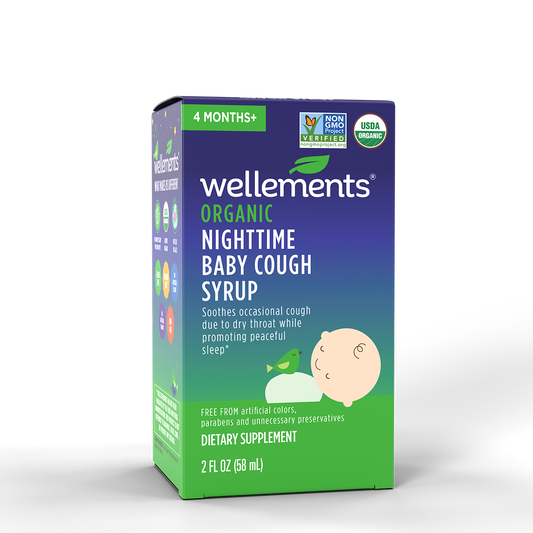
While a nighttime cough can be worrisome to new parents, it is not always troublesome. Understanding the types of coughs and your child's developmental stage will help you identify when concern and action are appropriate, and when to take night cough meds. If you ever have concerns about your child’s cough, seek medical attention or call your pediatrician or healthcare provider.